

WHO'S THE BOSS?

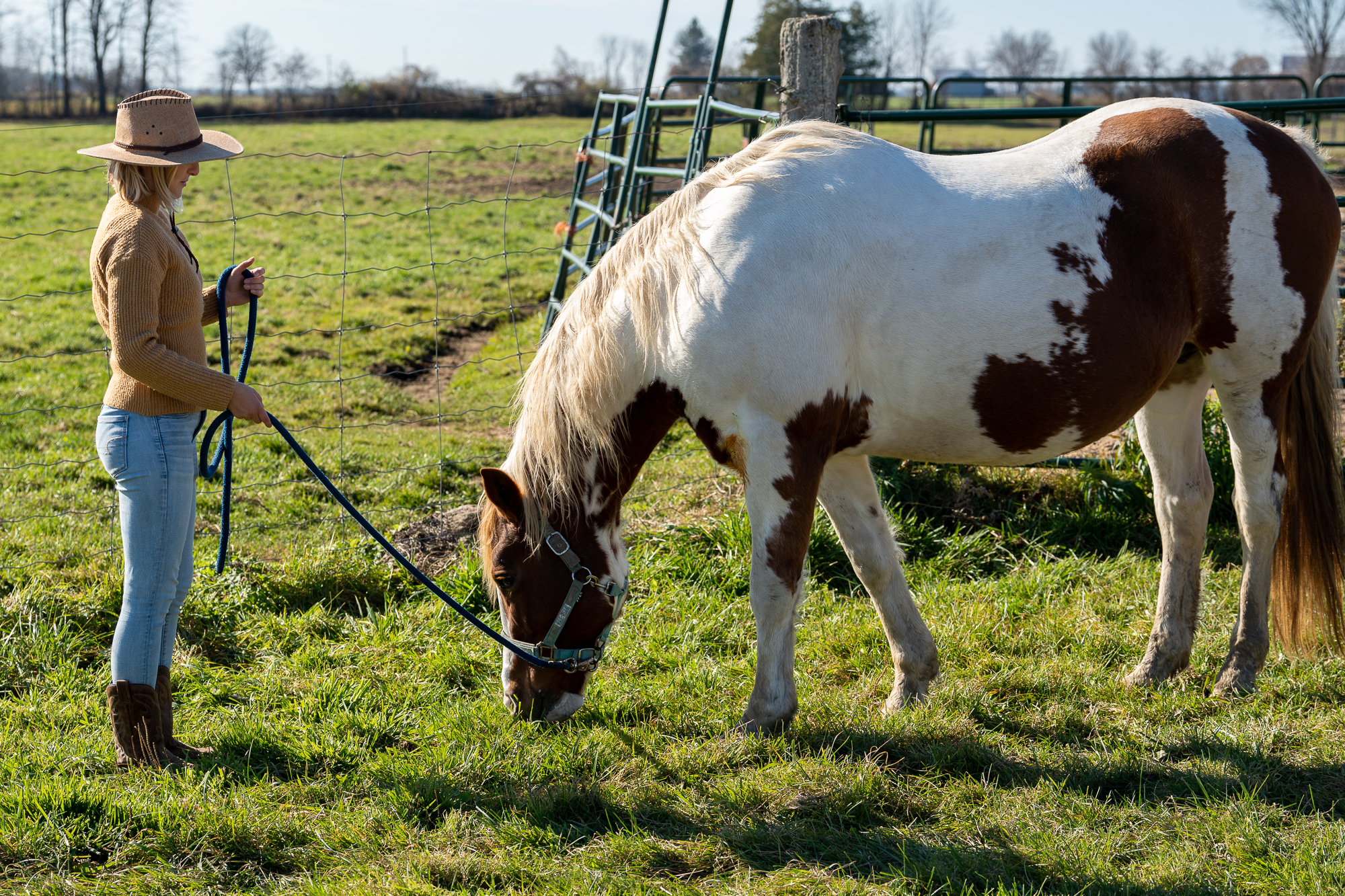
When I first met Brittney in 2022, I was a complete newbie to the horse world. I had huge respect for these massive animals who could seriously injure me with one kick, and at the same time, I had no idea what I was doing. I didn’t know the risks, the situations to avoid, how to stay safe, or even the basics of horse nature. The ranchers, especially Kat, the resident horse enthusiast of the highest order, taught me the fundamentals of how to behave around a horse and how to ride one.
It took at least six months before I stopped having butterflies in my stomach on every ride or flinching at every little movement Brittney made. She was patient, but she was also not particularly impressed by me. I could tell by the way she pulled her head away when I tried to pet her, or how she walked ahead of me instead of beside me, basically leading me on the lead rope. She was the seasoned master; I was the clueless apprentice.
I was determined to build a relationship and establish myself as her boss. Both took much longer than I expected.
Lesson 1: Familiarity, Rapport and Trust
Building a relationship takes time because it’s really about building familiarity, rapport, and trust. Research on herd dynamics shows that horses form long-term bonds through repeated positive interactions, synchrony, and grooming, all behaviours that build trust and emotional safety within the herd.
Our routine was simple and always the same: I’d feed her grain, brush her before saddling up, ride out with the same group of horses, and give her a good scratch when we were done. She appreciated it and started to feel safer around me.
Lesson 2: Being the Assertive (Even When It’s Not Your Default)
Building a relationship is one thing; becoming the leader is another. My natural tendency, confirmed by my Korn Ferry and SDI assessments, is to be agreeable and accommodating. I adjust quickly to others’ needs. That works well with humans, but not with a 1,000-pound horse who is not particularly impressed by my people-pleasing tendencies.
At first, my approach was: be nice, be soft, don’t upset the horse. If I’m kind enough, she’ll cooperate. Brittney, however, took that as an invitation to walk into my space, test boundaries, and treat my request to leave the meadow as optional.
So I had to shift. Less “nice,” more “clear.” This is what we’re doing now. I used the lead line not to force her, but to signal direction.
And interestingly, when I got clearer, she relaxed. She didn’t need me to be forceful, just more certain.
Lesson 3: Not Too Soft, Not Too Hard
I’ve also seen riders who go too far in the other direction, overly bossy, constantly yelling, holding their horses back while everyone else is moving forward. That frustrates a horse and crushes its spirit. Research confirms that effective equine leadership is neither rigid nor aggressive; it’s situational, adaptive, and grounded in emotional regulation.
The Leadership Parallel
It’s not that different with people or teams. Trust still comes from consistency, showing up the same way over time, and building shared experience, minus the grooming part. In leadership, self-awareness is paramount. What are your natural tendencies? What does the situation actually require? What does the other person need from you? Sometimes it’s safety. Sometimes it’s direction. Sometimes it’s getting out of the way. Flexing your style is a key leadership skill.
This is where I do a lot of my work with leaders and teams: using assessments as a starting point for self-reflection, and then building practical exercises to strengthen situational leadership in real time. If you want to explore your own leadership tendencies and how to flex your style more intentionally, feel free to reach out.